
Loading...
Serving Sierra Vista, AZ and surrounding areas. (520) 523-1076
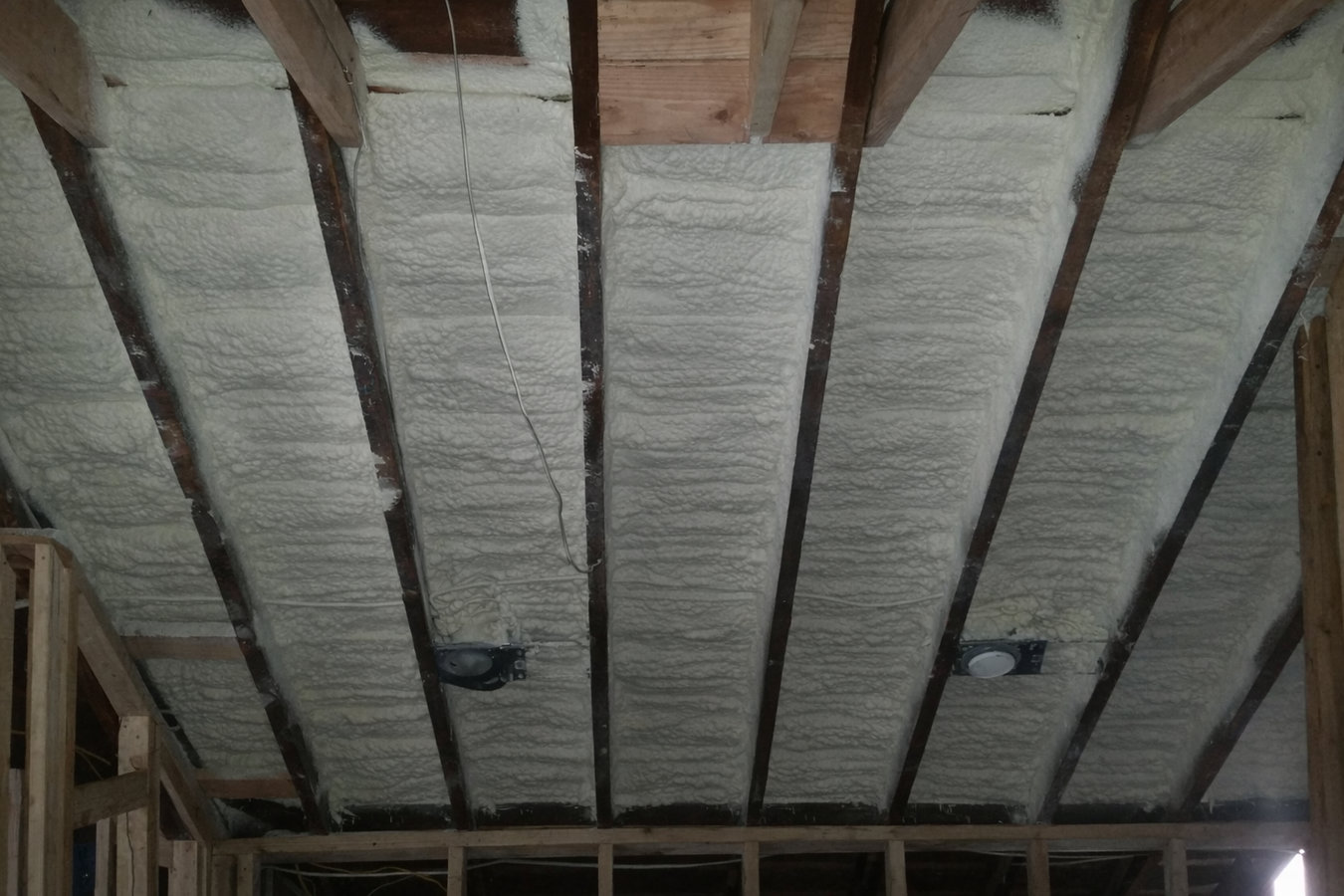
Your Sierra Vista home loses the most energy through gaps, air leaks, and thin spots. Closed-cell foam seals and insulates in one pass, with performance that holds for decades.
Your Sierra Vista home loses the most energy through gaps, air leaks, and thin spots. Closed-cell foam seals and insulates in one pass, with performance that holds for decades.
Closed-cell foam insulation in Sierra Vista is a two-part liquid a crew sprays onto walls, ceilings, or crawl spaces, where it expands and hardens into a rigid, dense layer that insulates and seals air gaps at the same time - most residential jobs are completed in four to eight hours with a 24-hour re-entry window after spraying.
Most insulation slows heat transfer but does nothing to stop air from pushing through cracks and gaps. Closed-cell foam handles both in a single application, which is why homeowners often notice their HVAC system running less often after installation - not just a smaller temperature swing, but fewer cycles overall. In Sierra Vista, where summer afternoons can hit the mid-90s and monsoon humidity arrives fast in July, that dual performance matters more than in milder climates. If you are also considering a broader spray foam insulation project, closed-cell foam is the denser, higher-R-value option best suited to hot desert climates.
If your electric bill climbs sharply from May through September and your HVAC seems to run almost constantly, your home is likely losing the battle against heat load. Sierra Vista summer sun bakes roofs and walls all day, and if your insulation is not up to the job, your air conditioner works overtime to compensate.
After a heavy monsoon summer, homes with older insulation sometimes develop a faint musty odor - a sign moisture has gotten into wall cavities. If drywall near exterior walls feels slightly soft, moisture has likely been sitting there. Closed-cell foam resists water absorption, stopping this cycle before it starts.
When one room is noticeably harder to keep comfortable, that part of the house typically has less insulation or more air leaks. This is common in older Sierra Vista homes where additions were built at different times. Closed-cell foam can be targeted to problem areas without requiring a whole-house project.
Sierra Vista sits in a valley that channels wind, and on gusty days you may feel cool air pushing through electrical outlets on exterior walls. That air movement means gaps in your home envelope that insulation alone will not fix - but closed-cell foam expands to seal those gaps as it cures, stopping the draft at its source.
We apply closed-cell foam to attics, exterior walls, garage ceilings, crawl spaces, and basement walls. For most Sierra Vista homes, the attic is the highest-impact starting point - it is where summer heat enters most aggressively and where the biggest efficiency gains are typically found. After the attic, exterior walls and the garage ceiling are the next most valuable targets, particularly in older homes where the original insulation has settled or degraded.
We also do targeted applications in specific problem areas - the back bedroom that is always too hot, the bonus room above the garage, the crawl space that picks up monsoon moisture every summer. Homeowners exploring the difference between foam types will want to look at open-cell foam insulation as the lower-density alternative - it costs less but does not match the moisture resistance or R-value per inch of closed-cell. For a complete overview of both foam options, our spray foam insulation page covers the full comparison.
Best for Sierra Vista homeowners whose attic is the primary source of summer heat gain and where moisture resistance is a priority.
Suits older homes with thin or missing wall insulation where air leakage contributes as much as heat transfer to energy loss.
Ideal for homes with ground moisture concerns, providing both insulation and a moisture barrier in a single application.
For homeowners with one or two rooms that are consistently harder to keep comfortable than the rest of the house.
Sierra Vista sits at roughly 4,600 feet in the Sulphur Springs Valley, which means the climate here demands more from insulation than most Arizona cities. Summer days push into the mid-90s while nights drop into the 60s - that daily swing puts constant pressure on your home envelope as heat pushes in during the day and the structure releases it at night. Closed-cell foam handles this cycling better than softer materials because it does not expand and contract, keeping the seal tight year after year. The monsoon season from July through September adds a real humidity variable, and closed-cell foam resists moisture absorption in a way fiberglass batts simply cannot match. Homes built during the Fort Huachuca growth years often have little original insulation, making them strong candidates for a closed-cell upgrade that brings the performance up to a modern standard in one visit. The Spray Polyurethane Foam Alliance publishes installation best practices that experienced contractors are expected to follow.
We work on homes throughout the region, including Sierra Vista and Douglas. Both communities share the same high-elevation desert climate and the same housing stock characteristics that make closed-cell foam one of the most cost-effective upgrades available for homes in this region.
We ask about your home size, which areas you want insulated, and any prior insulation work. We respond within 1 business day and schedule a free walk-through at your convenience.
A contractor checks your attic, walls, or crawl space, looks for moisture or existing insulation issues, and measures the areas to be covered. You receive a written estimate specifying foam thickness and total cost.
Before install day, you clear the work areas and arrange to be out of the home for about 24 hours after spraying. Your contractor gives you a specific re-entry time in writing so you can plan.
The crew sprays foam in controlled passes, building thickness in layers. Most single-story Sierra Vista homes are completed in four to eight hours. A walkthrough confirms coverage before the crew leaves.
Free estimate, written quote before any work starts. We respond within 1 business day.
(520) 523-1076Every closed-cell job starts with a free written estimate that spells out the foam type, the thickness, and the cost before you sign anything. You can review it on your own time and compare it against other quotes, so you know exactly what you are paying for.
We have worked on homes in Sierra Vista and the surrounding area since 2023. We know the Fort Huachuca-era housing stock, the permit process through the City of Sierra Vista, and the specific installation considerations that come with high-altitude desert conditions.
Contractors who quote low often do it by applying thinner foam. We specify the exact thickness in your written estimate so you can compare bids accurately. The thickness determines the R-value you actually get - and that number matters in a Sierra Vista summer.
The EPA recommends specific re-entry protocols for spray foam jobs. We give you the re-entry time in writing before installation starts - not something you have to ask about or figure out yourself.
Closed-cell foam is a meaningful investment, and you deserve a contractor who can back up their work in writing. Every job we do starts with a clear scope and ends with a verified walkthrough.
The lower-density foam option - costs less per square foot and works well in interior applications where moisture resistance is less critical.
Learn moreFull overview of both closed-cell and open-cell spray foam options for Sierra Vista homeowners deciding between the two.
Learn moreSchedule your free estimate now - our installation calendar fills quickly once temperatures start climbing in spring.