Loading...
Serving Sierra Vista, AZ and surrounding areas. (520) 523-1076
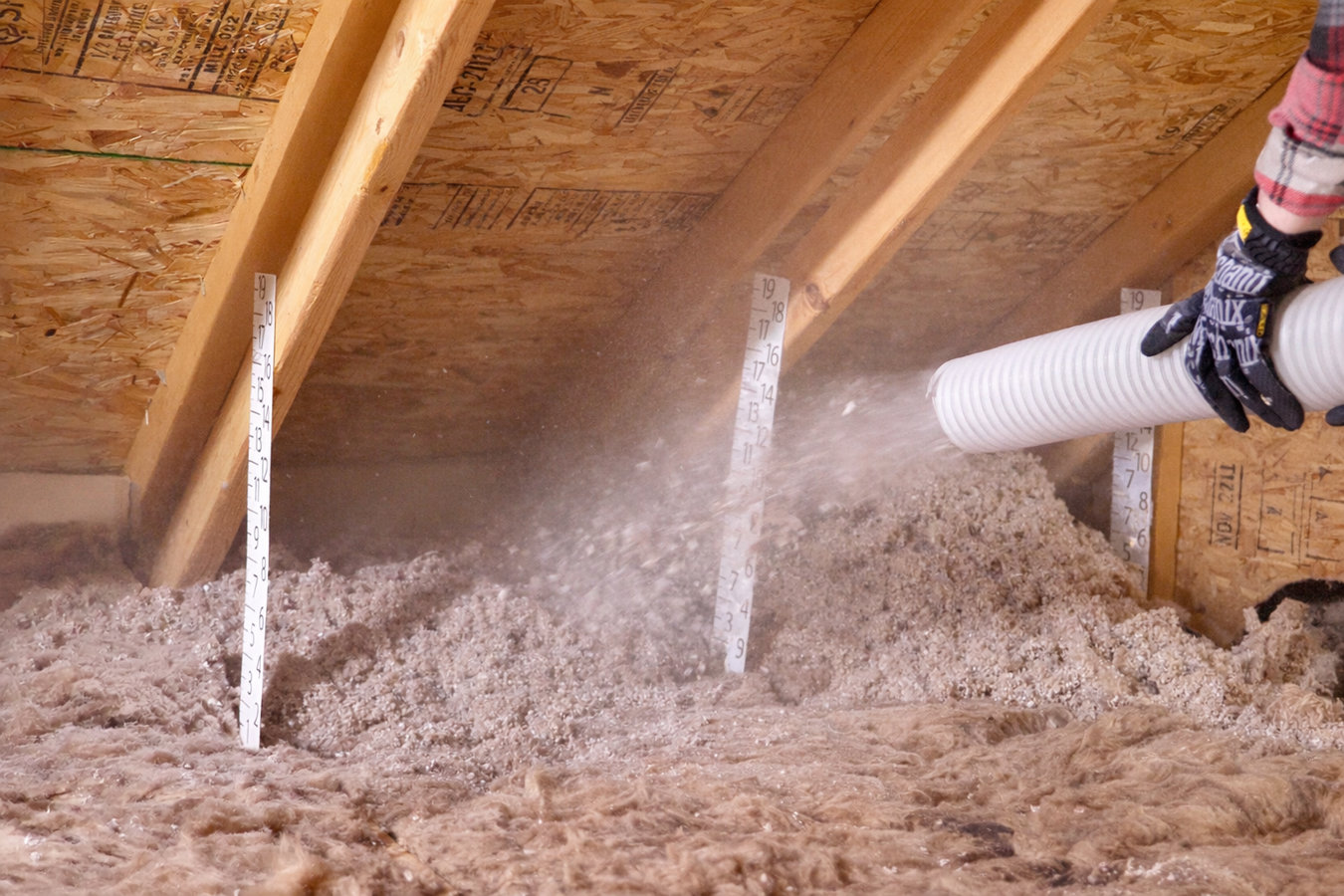
Blown-in insulation fills every corner of your attic - including the tight spots and irregular areas that batt insulation misses - without any drywall removal or major disruption. It is the fastest way to bring an older Sierra Vista home up to current energy standards.
Blown-in insulation in Sierra Vista, AZ fills irregular attic spaces completely in a single installation - most standard-sized homes are finished in four to six hours with no need to open walls or remove flooring.
Most Sierra Vista attics are not clean rectangles. They have HVAC equipment, ductwork, wiring runs, framing obstructions, and tight corners near the eaves where traditional batt insulation cannot reach. Blown-in material is installed through a hose and settles into every space - including spots a person cannot easily access. That complete coverage is what makes it the preferred choice for upgrading existing attics in older neighborhoods near Fort Huachuca and throughout Cochise County. It is frequently recommended alongside attic insulation upgrades when homeowners want the most thorough energy improvement.
Sierra Vista sits at 4,600 feet and deals with genuine winters alongside its summer heat - which means your insulation needs to work year-round, not just during cooling season. Blown-in at the right depth (R-38 or higher, per Department of Energy recommendations for this climate zone) handles both directions: blocking summer heat from entering and keeping winter warmth from escaping. Many older homes in the area have only 3 to 5 inches of original insulation - far below what is needed to perform in either season.
If you open your attic hatch and can clearly see the wooden beams running across the attic floor, your insulation is almost certainly too thin. Properly insulated Sierra Vista attics should have material covering those beams completely - typically 10 to 15 inches of depth depending on the material used. This single visual check tells you more than most energy audits.
If your electric bill spikes sharply from June through August and your AC runs almost constantly, the most likely culprit is heat entering through an under-insulated attic ceiling. Sierra Vista's summer sun can push attic temperatures above 140 degrees - without adequate insulation between that space and your living area, your cooling system is fighting a losing battle every afternoon.
Homes built before the mid-1990s - including most of the housing stock near Fort Huachuca and in central Sierra Vista - were typically built with insulation levels well below today's standards. The insulation that was installed decades ago has also likely settled or degraded over time. If your home has not had an insulation upgrade, it is almost certainly under-insulated.
If the bedroom over the garage or the room at the end of the hall is noticeably hotter than the rest of the house in summer, you have an insulation gap somewhere. Blown-in does a particularly good job of reaching those problem areas because it flows around obstructions and into corners that batt insulation never fully covers.
We install both cellulose and fiberglass blown-in materials depending on your attic conditions and your preference. Before any material goes in, we complete an air sealing step - closing gaps around recessed lights, pipe penetrations, and framing openings. This is the step many contractors skip, and it is the step that determines whether your insulation performs the way it should. Blown-in material laid over unsealed gaps will allow conditioned air to escape right through the insulation layer, which is why we treat air sealing as a standard part of every job rather than an optional add-on. For homes with severe moisture concerns or high-performance goals, we can also discuss whether spray foam insulation would be a better fit for part or all of your project.
Made from recycled paper, denser than fiberglass, and effective at slowing air movement through the insulation layer. A common choice for older homes throughout Sierra Vista.
Resistant to settling and moisture absorption over time. Works well in well-ventilated attics and pairs effectively with air sealing.
When existing material is in good condition, we add blown-in on top to bring the total depth up to the recommended level without full removal.
For attics with wet, pest-contaminated, or severely degraded material that needs to come out before new blown-in will perform correctly.
Sierra Vista has a large number of homes built quickly during the city's growth years to house military personnel and their families near Fort Huachuca. Many of those homes were built with minimal insulation that has spent decades settling, absorbing moisture, and being disturbed by HVAC maintenance and pest activity. Blown-in is the fastest way to address that legacy without a major renovation - existing material can often stay in place, and new blown-in goes on top to bring total depth up to current standards. Homeowners across Sierra Vista dealing with aging attic insulation consistently find that blown-in is the right combination of cost-effective and thorough for their situation. The U.S. Department of Energy provides R-value recommendations by climate zone that help homeowners understand what depth they actually need.
The city's location at over 4,600 feet means the thermal demands are different from Phoenix or Tucson. Summers are hot enough that inadequate attic insulation drives up cooling costs significantly - but winters are real too, with freezing nights from November through February. Blown-in at the right depth addresses both seasons, which is exactly what the DOE recommends for Climate Zone 3 where Sierra Vista falls. Homeowners in Benson and Nogales face similar elevation and climate conditions - blown-in is the standard attic insulation solution across this region of Cochise County.
We ask about your home's size, age, and your main concern - whether that is high bills, uneven temperatures, or a specific problem area. We schedule a free in-person estimate, typically within a few days, and reply within 1 business day.
We inspect your attic, measure the current insulation depth, note any damaged or wet material, and check for gaps that need air sealing. You receive a written quote that specifies the material type, installed depth in inches, resulting R-value, and total price. No verbal quotes only.
The crew sets up the blowing machine and hose outside and feeds the material into your attic through the access hatch. Air sealing happens first, then the blown-in follows. The process is noisy but contained. Most standard homes are finished well within a day.
After installation, we photograph the finished work showing the final depth and coverage. We leave you with a written record of the material installed and the depth achieved - documentation you will need for any utility rebate or federal tax credit application.
We come out, measure your current insulation, and give you a written quote specifying the depth, material, and total cost. No guessing, no pressure - just a clear picture of what your attic needs and what it costs to fix.
(520) 523-1076Every blown-in job starts with a free written estimate that spells out the coverage, the R-value, and the cost in plain terms. You can review it and compare it against other quotes before you commit. Do not hire a blown-in contractor in Sierra Vista who cannot put the details in writing.
Blown-in insulation laid over unsealed gaps underperforms because conditioned air escapes right through those openings. We air seal every attic before installing new material - it is a standard part of our process, not an upsell. The Building Performance Institute recognizes air sealing as a critical component of any attic insulation upgrade.
A responsible blown-in quote tells you the material type, the target installed depth in inches, and the resulting R-value. Quotes that give you only a lump-sum price leave you with no way to verify the quality of the job after the crew leaves. Every quote we provide includes all of those specifics in writing.
Many Sierra Vista homeowners are on the Tucson Electric Power grid, which has offered rebates for qualifying insulation upgrades. Federal tax credits for energy efficiency improvements are also currently available. We provide the documentation you need to file both - installed depth, material type, and a detailed invoice - before we leave the job site.
Experienced crews, air sealing discipline, and clear written documentation are the standards that distinguish a contractor who stands behind their work from one who moves on to the next job as quickly as possible. For independent guidance on insulation installation standards, the North American Insulation Manufacturers Association publishes guidelines on proper blown-in installation practices.
Blown-in is the most common material used in attic insulation upgrades throughout Sierra Vista - it fills every corner without drywall removal or wall disruption.
Learn moreAir sealing gaps before blown-in installation is the step that determines whether your insulation performs as advertised or lets conditioned air slip right past it.
Learn moreA contractor will come out, measure your current attic insulation, and give you a written quote before any work begins. Free, no obligation, and no pressure - just the information you need to make a good decision.